
The Essentials (On-Page SEO)
✅ Index Status (Critical): Ensure ‘Allow Indexing’ is set in your settings. If search engines can’t index the page, then it won’t be ranked at all
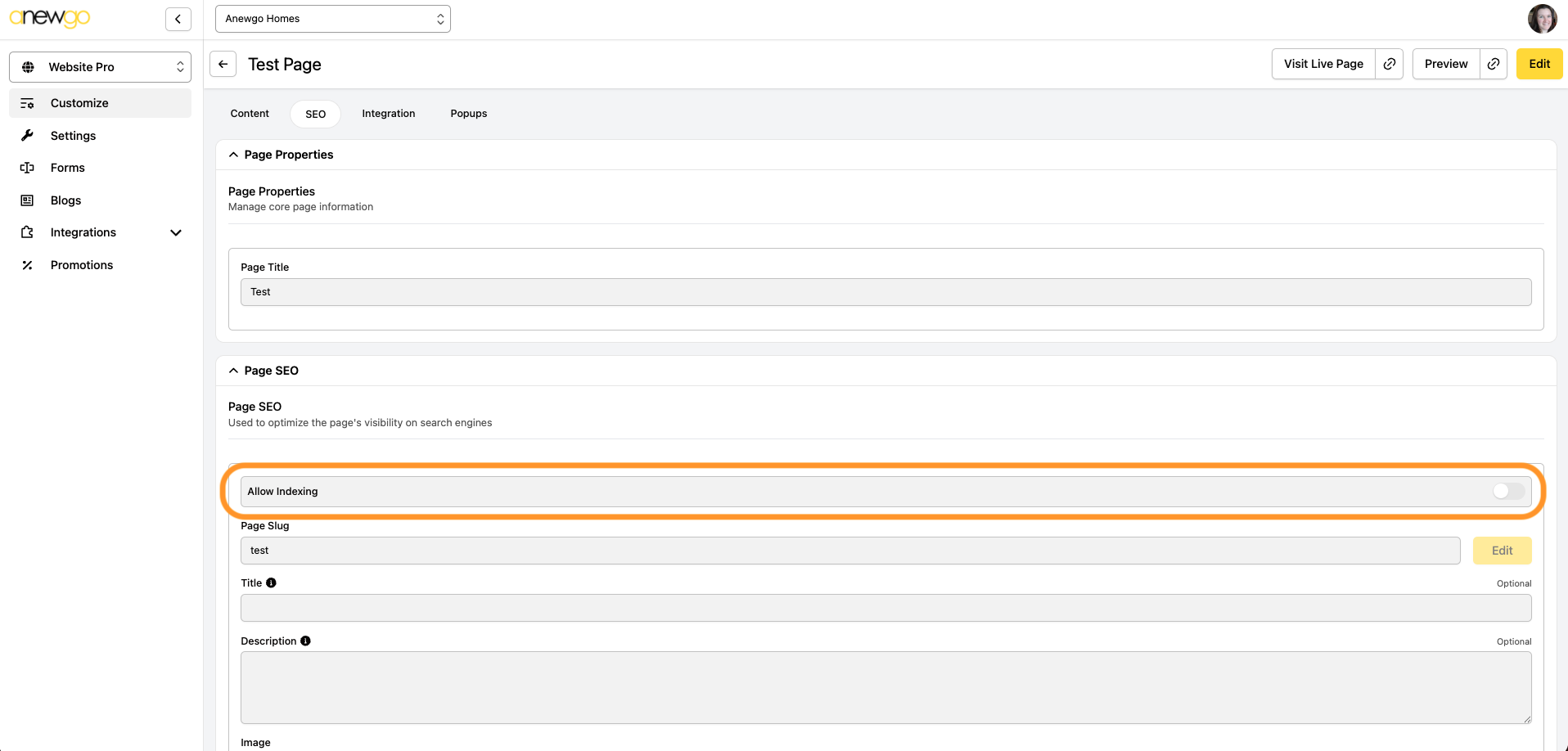
✅ Primary Keyword Targeting + Keyword Research (Critical):
Before creating a page, identify:
a) 1 primary keyword (the main topic you want the page to rank for)
b) 3–5 secondary keywords (variations, long-tail phrases, and semantic related terms)
Ensure the keyword matches what people are actually looking for:
- Informational: People want to learn about the process.
- Example search: “steps to buying a new construction home” → write a guide or blog post explaining the process.
- Commercial: People are comparing options or features.
- Example search: “best floor plans for families in [city]” → write comparison pages or highlight different floor plan options.
- Transactional: People are ready to buy or schedule a visit.
- Example search: “buy a new home in [neighborhood]” or “schedule a tour of new homes in [city]” → write landing pages with CTAs like “Schedule a Tour” or “Request Pricing.”
Tip: Look at the top Google results for your keyword. If they are mostly guides, don’t try to sell directly—provide the information first. Make sure your page matches what the buyer expects at their stage in the journey.
Place the primary keyword in:
- Title tag
- URL slug
- H1
- First 100 words of the page
- At least one subheading
- Naturally throughout the content
Use secondary keywords in:
- Subheadings (H2/H3)
- Image alt text
- Bullet points or feature sections
- FAQ sections
- Naturally throughout the body content
Goal: Build strong topical relevance without keyword stuffing. Optimize for clarity and intent, not density.
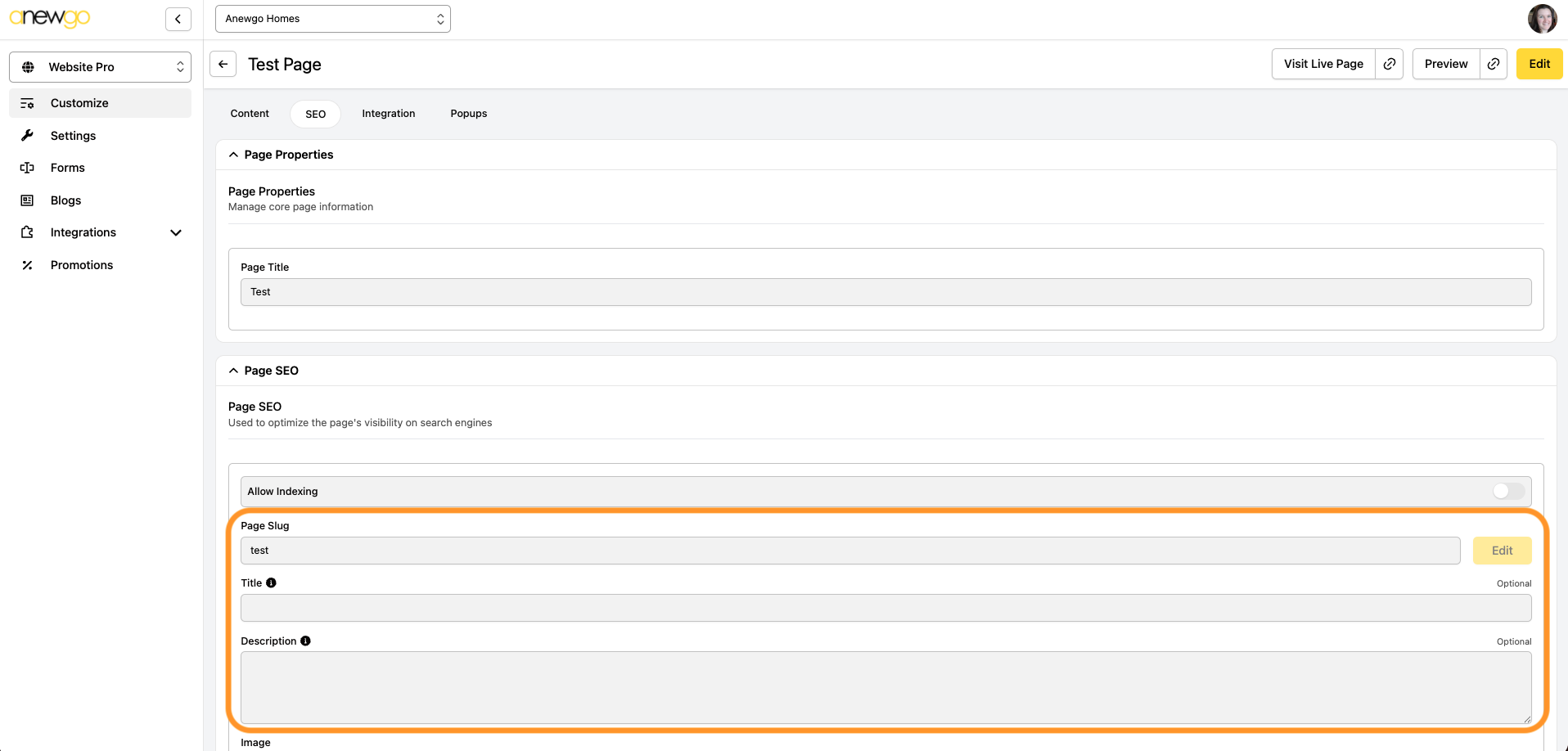
✅ URL Slug (High): Keep it short, descriptive, and use hyphens. Helps search engines understand page topic and reinforces your primary keyword
BAD: /page-123-final-v2
GOOD: /schedule-new-home-tour
✅ Title Tag (Critical): Keep it under 60 characters. Place your primary keyword near the beginning. This has a strong ranking factor and is the main clickable headline in Google results.
✅ Meta Description (Medium): Treat this as your “ad copy.” Keep it under 155 characters and include a Call to Action (CTA). This does not directly affect rankings, it affects click-through rate, which influences performance. Aligns search intent with page content.
Content Quality & Structure
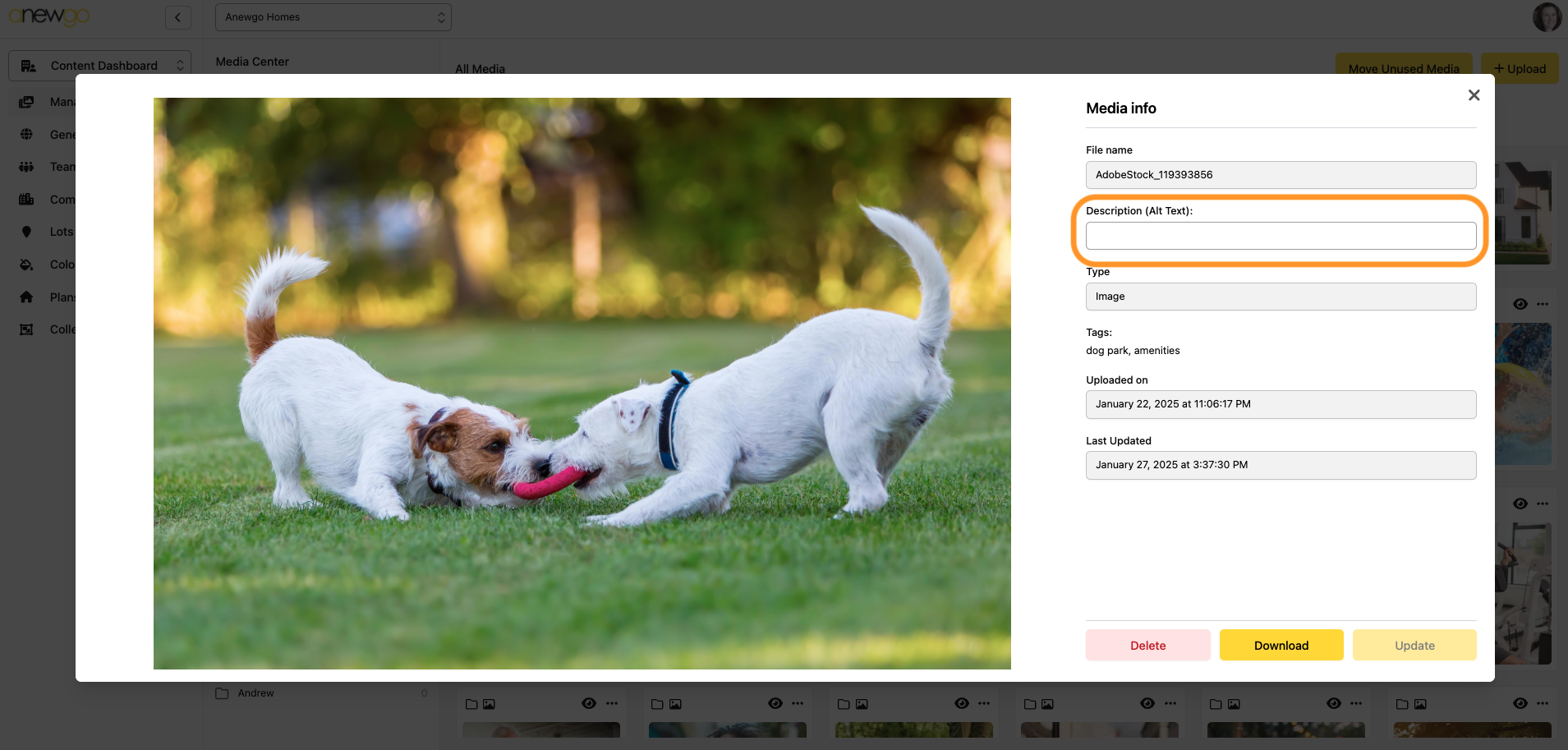
✅ Image Alt Text (Medium): Don’t just leave it blank or use “image1.jpg.” Describe the image for accessibility and search crawlers (e.g., “Golden retriever puppy playing with a tennis ball”).
✅ Internal Linking (High): Link to at least 2-3 other relevant pages on your site to keep users engaged. This improves crawl-ability, authority, strengthens topic clusters
✅ External Linking (High): Link to 1-2 high-quality, authoritative sources to build credibility. This builds credibility, shows topical association, and strengthens trust signals. Example: Citing research from credible industry publications
The “Human” Factor (UX)
✅ Readability (High): Use short sentences and bullet points. Avoid “walls of text.”
Open the page on your phone and review it. Make sure:
- Paragraphs aren’t too long
- Bullets stack cleanly
- Headings clearly break up sections
- Nothing feels overwhelming to read
Google uses mobile-first indexing—if it’s hard to read on mobile, performance can suffer.
✅ Value Proposition (Critical): Does the page answer the user’s question within the first two paragraphs?
✅ Entity Clarity (Critical): Be crystal clear about who you are. Ensure the page links to a robust “About” or “Contact” page that proves E-E-A-T (Experience, Expertise, Authoritativeness, Trust). Search engines want to understand who created this content and why they should be trusted.
- Clear Brand name
- Linked author profile
- Detailed About page
- Real credentials or experience
- Business address
- Testimonials or case studies
- Linked social profiles
✅ Information Gain (High): AI models ignore content that just repeats what’s already on the web. Include unique data, personal case studies, or a brand-specific POV that hasn’t been said a thousand times.